


2020: Smart Tags – innovative packaging tags
At the beginning of 2020, the EIT Food "Smart Tags" project began, implemented by a project team consisting of food producers, universities and research units.
The project's goal is to increase consumer confidence in food products and their production and transportation processes by providing information about a given product's value chain. The product value chain encompasses all activities related to the production and sale of a product, as well as all services provided after its purchase, which together create the product's value. The product value chain defines the entire product lifecycle—from the raw materials used to the moment of purchase by the final consumer. The project's idea is to provide consumers and food suppliers with an interactive connection through smart labeling and the use of smart tags. The project envisions using smart tag packaging to communicate with consumers, not only by sharing information between producers but also by creating opportunities for consumers to provide feedback, ask questions, and co-create and develop products and services. Consequently, food producers would also gain valuable data leading to a better understanding of their customers' needs for new products and services.
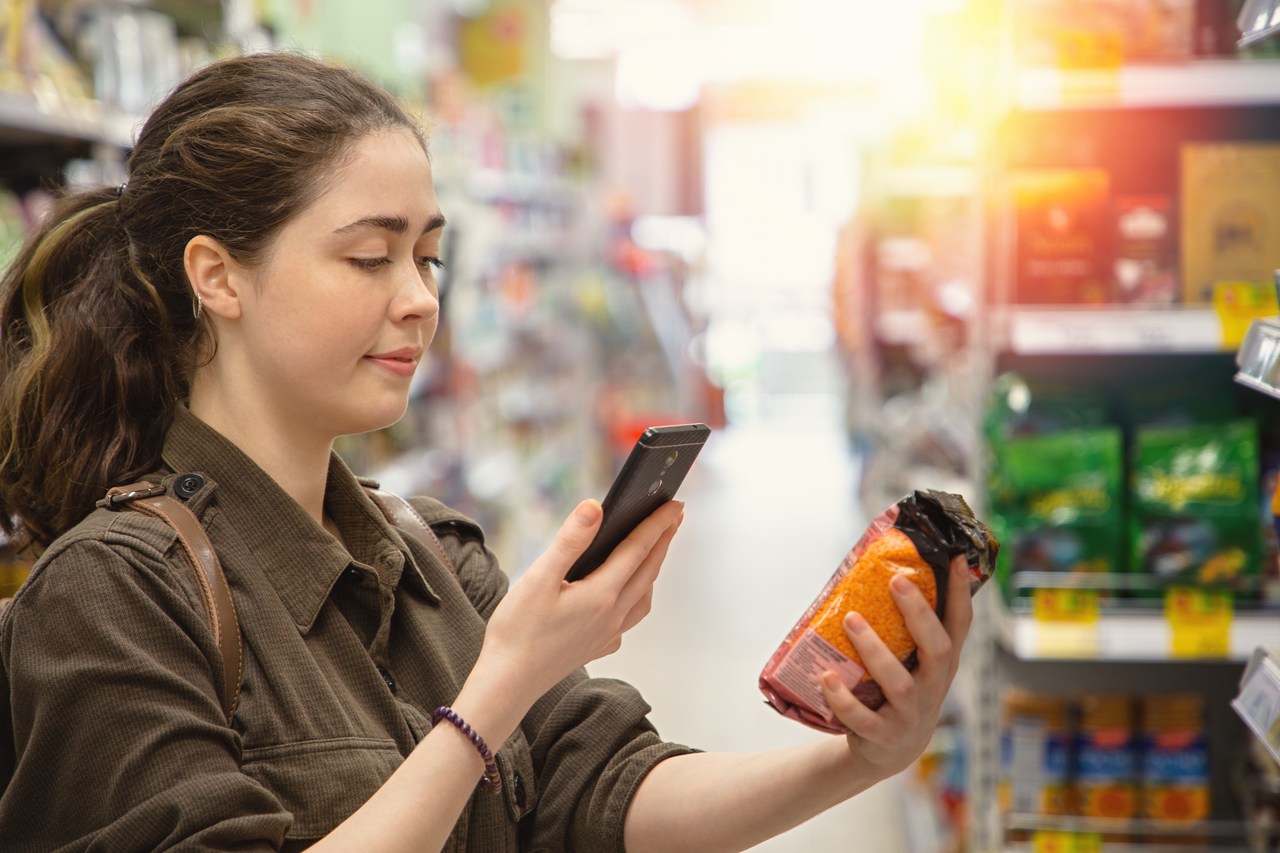
In a highly globalized world where food value chains can be long and complex, consumers increasingly lack trust in food producers. Research shows a gap between the level of information consumers need on food packaging to make informed purchasing decisions and what is currently included on labels. The information consumers are interested in includes:
– ingredients and their origin,
– product creation in the “Sustainable Production” model,
– product creation in the "Fairtrade" system,
– authenticity,
– transport conditions,
– shelf life
– the recyclability of the packaging. Consumers often have difficulty interpreting nutritional information. Furthermore, many products have additional, vague claims on their labels, such as "sustainable," "natural," or "healthy"—without supporting these claims with facts and figures. Could a Smart Tag provide clarification for such statements? Absolutely, but the way such information is conveyed depends on the type of Smart Tag used on the packaging.
Smart tags, also known as intelligent indicators with unique functions, are tags that can be an integral part of a product, placed and visible on the packaging. In addition to monitoring product quality and safety, they can also provide potential consumers with a wealth of other information related to the product's value chain. Smart packaging utilizes various types of indicators, such as sensors for detecting volatile substances, carbon dioxide, or oxygen; and indicators for monitoring environmental conditions (temperature, time, humidity, lighting, etc.). An example of a smart tag is a 2D barcode, with certain areas printed with functional ink. The code scan result will change if a given portion of the barcode changes color or disappears completely due to environmental conditions. This provides customers with access to more detailed product information in real time (real-time information). Packaging containing QR codes or RFID tags is also considered smart packaging. As part of the Smart Tags project, an analysis of solutions available on the market will be carried out and an attempt will be made to develop a new Smart Tag whose functionalities will meet the expectations of consumers, food producers and entities associated with the value chain of a given product identified in 2020.
The Smart Tag project is coordinated by the Finnish Technical Research Centre (VTT Technical Research Centre of Finland). Other project partners include the University of Warsaw (Poland), Maspex Group (Poland), University of Reading (United Kingdom), KU Leuven (Belgium), Matis (Iceland), AZTI (Spain), and DouxMatok (Israel).
The Smart Tag project is funded by EIT Food, a European Union body. Innovative solutions and service concepts using Smart Tag technologies will be developed in collaboration with consumers and other stakeholders in all participating countries. Project results can be tracked on project website and account Twitter .
